
Knowledge Creates Confidence.
Many workers don’t realize the rights and protections available to them until something goes wrong. Whether you’ve been retaliated against, denied wages you earned, harassed, discriminated against, or fired without a lawful reason, understanding your rights can help you make informed decisions and move forward with confidence.
Request a free consultation
Tell us what happened. A New York attorney calls you back within hours, not days — in English or Spanish.

Retaliation is illegal. Silence isn’t the only option.
Every worker deserves to be treated fairly — and protected from retaliation.
Many workers don’t realize the rights and protections available to them until something goes wrong. If you’ve been retaliated against for filing a workers’ comp claim, denied wages you earned, harassed or discriminated against, or fired without a lawful reason, understanding your rights is the first step toward moving forward with confidence.
One of the biggest challenges we see is misinformation. Workers are often told — by an employer, a coworker, or their own assumptions — that they have no options: “it’s too late,” “you signed something,” “that’s just how it works here.” The truth is every situation is different, and you should never assume you don’t have rights without first understanding your options.
For more than 93 years, The Disability Guys have helped New York workers understand their rights, protect their livelihoods, and hold employers accountable. Our goal is not simply to represent clients — it’s to help people understand what the law actually allows, so they can make informed decisions about their next step.
Six ways New York employers cross the line — and what the law says about it.
Plaintiff-side only. We never represent employers. Free consultation on every case.
Workers’ Comp Retaliation
NY Workers’ Compensation Law §120 makes it illegal for your employer to fire, demote, or harass you because you filed a workers’ comp claim.
Read moreUnpaid Overtime & Wage Theft
Federal and New York law give you up to six years to recover stolen wages — including overtime, tips, and off-the-clock time.
Read moreWorkplace Harassment
Sexual harassment, hostile work environments, and quid pro quo demands are prohibited under federal law, NY State Human Rights Law, and the NYC Human Rights Law.
Read moreWorkplace Discrimination
Title VII, the ADA, the ADEA, FMLA, NY State Human Rights Law, and the NYC Human Rights Law protect you from discrimination based on race, sex, age, disability, and more.
Read moreWrongful Termination
New York is an at-will state — but at-will employment has limits. If you were fired for a discriminatory or retaliatory reason, the firing may be illegal.
Read moreSeverance Agreement Review
A severance agreement waives your right to sue. Before you sign, you have specific rights under federal and New York law — including time to review and the right to an attorney.
Read moreIf something happened at work, here’s how to protect yourself.
Document everything as it happens
Save termination letters, performance reviews, pay stubs, texts, and emails, and write down dates and what was said while your memory is fresh. Courts look closely at the timeline — the closer an adverse action follows a claim, a complaint, or a protected activity, the stronger the case.
Don’t assume you have no options
Workers often believe “my injury isn’t serious enough,” “I signed something,” or “it’s too late.” The truth is every situation is different, and undocumented workers have the same wage, retaliation, and anti-discrimination protections as any other employee.
Know your filing deadlines
Deadlines vary by claim type — an EEOC charge generally must be filed within 300 days in New York, while NY State and NYC Human Rights Law claims allow three years, and wage claims can reach back up to six years. Missing a deadline can permanently bar your claim, so don’t wait to find out which one applies to you.
Never sign a severance agreement without review
A severance agreement waives your right to sue. Workers over 40 are entitled under federal law to at least 21 days to consider the agreement (45 for group terminations) and a 7-day window to revoke their signature. We review severance agreements at no cost before you sign anything.
Talk to a Workers’ Rights attorney — free
A free consultation costs you nothing and puts a New York attorney on your side to evaluate what happened and what it’s worth. We handle these cases on contingency. No fee unless we win.
Questions we hear every day
Plain-English answers about your rights at work and what to do when something goes wrong.
Can I be fired for filing a workers’ comp claim?
No. NY Workers’ Compensation Law §120 makes it illegal for your employer to fire, demote, cut your hours or pay, or otherwise punish you because you filed a workers’ comp claim — or even because you tried to file one. Being on workers’ comp doesn’t make you immune from all termination, but a firing motivated by your claim is illegal. See our workers’ comp retaliation page for more.
What counts as workplace retaliation?
Retaliation doesn’t always look obvious. It can be a termination that follows a claim by days or weeks, a sudden drop in performance reviews, a shift to a worse schedule, or pressure to resign. If your employer made conditions so bad that you felt you had no choice but to quit, that can also count as retaliation — you don’t have to wait to be formally fired.
How long do I have to file a workplace harassment or discrimination claim in New York?
For an EEOC charge you generally have 180 days from the last act (300 days in New York, since a state agency also has jurisdiction). Under the NY State Human Rights Law and the NYC Human Rights Law, you have three years to file directly in court. Missing a deadline can permanently bar your claim, so don’t wait to talk to an attorney.
Is my employer allowed to pay me straight time instead of overtime?
No. Under the federal Fair Labor Standards Act and NY Labor Law §160, you’re owed 1.5 times your regular rate for every hour over 40 in a workweek. Calling you an independent contractor or a salaried exempt employee doesn’t automatically excuse an employer from this requirement — many misclassified workers are still owed overtime.
How far back can I recover unpaid wages?
New York wage claims can go back six years under NY Labor Law §198 — longer than the two- or three-year window under the federal FLSA. Filing under New York law almost always covers more ground, and your employer may also owe liquidated damages equal to double the unpaid wages.
New York is an at-will state. Can my employer fire me for any reason?
Not for any reason. At-will employment has real exceptions: it’s illegal to fire someone because of a protected characteristic, because they filed a workers’ comp claim, or because they reported unsafe or unlawful conduct. If you signed an employment contract or are covered by a union agreement, that can also limit your employer’s ability to terminate you.
Should I sign the severance agreement my employer gave me?
Not before an attorney reviews it. A severance agreement waives your right to sue for discrimination, retaliation, wage theft, or other claims. If you’re over 40, federal law requires at least 21 days to consider the agreement (45 days for group layoffs) and a 7-day period to revoke your signature after signing. We review severance agreements at no cost.
I’m undocumented. Do I still have these rights?
Yes. Undocumented workers have the same workers’ comp retaliation protections under §120 and the same wage and hour rights under federal and New York law as any other employee. Your immigration status does not affect your right to back pay or to be free from retaliation.
Real cases. Real results.
Representative examples from cases we’ve handled. Details have been altered or generalized to protect client confidentiality.
Warehouse worker fired nine days after filing a WC claim for a back injury. WCB found a clear §120 violation. The Board ordered full back wages doubled plus reinstatement to the same position at the same pay rate.
A group of tipped servers whose tips were shared with managers in violation of the FLSA and NY Labor Law §196-d. We filed a collective action covering a three-year period. All participating workers recovered the full stolen tips plus an equal amount as liquidated damages.
Female employee in NYC subjected to repeated sexual advances by a senior manager over eight months, then retaliated against when she refused. We filed under the NYC Human Rights Law. The case resolved in a confidential settlement covering all lost wages, emotional distress, and attorney fees.
Prior results do not guarantee a similar outcome. Each case is evaluated on its own facts. The case outcomes shown are representative examples; details have been altered or generalized to protect client confidentiality.

Other ways we help
Same firm, same approach — different practice areas under one roof.
Workers’ Compensation
Injured at work. Lost wages. Denied benefits.
Learn more →Social Security Disability
Can’t work due to a disability. SSDI & SSI claims, denials, appeals.
Learn more →Long-Term Disability
Private LTD insurance denied or cut off. ERISA appeals.
Learn more →Personal Injury
Car accident. Construction site. Scaffold Law.
Learn more →Find a lawyer near you
Seven offices in the towns working New Yorkers actually live.
The attorneys who work your case
Not a call center. The lawyer who signs you is the lawyer who shows up.
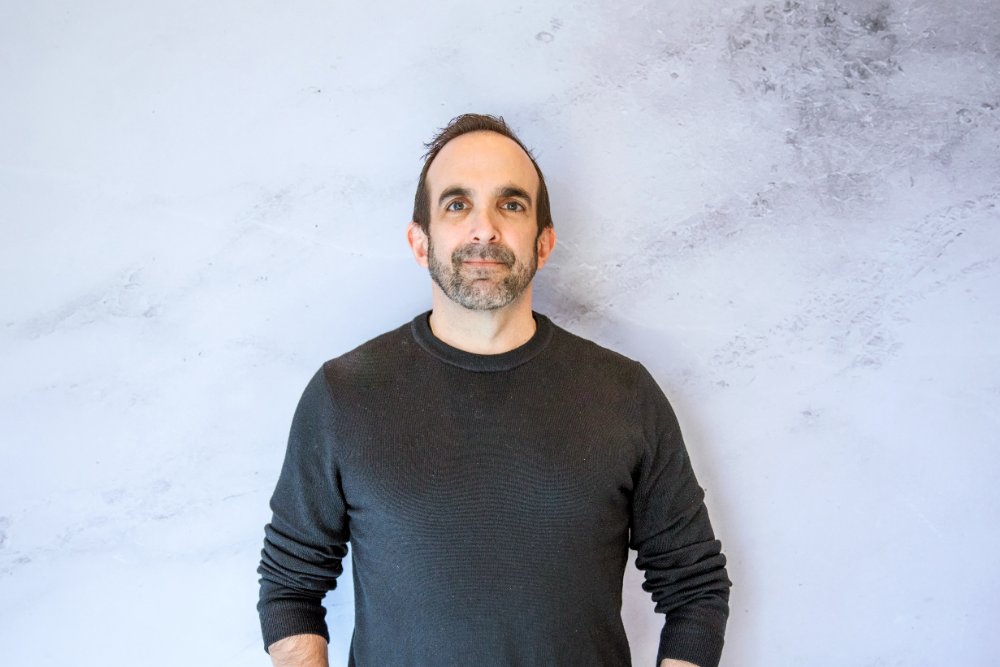
Brian M. Mittman, Esq.
Managing Partner · Markhoff & Mittman, P.C.
Call 866-205-2415 Schedule with Brian- Admitted in New York
- 30+ years in practice
- Attends Board hearings personally
Brian has personally handled New York workers' compensation, SSDI, and personal-injury cases for over three decades. Your case is never handed off to a paralegal.
- Admitted in New York and New Jersey
- Pace University School of Law, J.D.
- Litigates before the Workers' Compensation Board
Randy has litigated every type of claim before the Workers' Compensation Board on behalf of hundreds of claimants.
- Admitted in New York, 2008
- New York Law School, J.D. 2007
- With The Disability Guys since 2013
Benai has spent more than a decade fighting for injured workers before the Workers' Compensation Board and the New York State Employees' Retirement Board.
- Admitted in New York, 2007
- 20 years in practice
- Fluent in Spanish
Emily has spent two decades on New York workers' compensation and Social Security Disability matters, including service as an Agency Attorney and Hearing Officer for NYC Transit and the MTA.
- Admitted in New York, 2023
- Albany Law School, J.D. 2022
- Handles Third Department appeals
Lauren represents injured workers in Workers' Compensation matters and handles appeals before the Appellate Division, Third Department.




Talk to a real attorney today.
Free consultation. No fee unless we win. English or Spanish. Day or night.