
Discriminated Against at Work in New York?

Federal and New York law prohibit discrimination in hiring, pay, promotion, and termination
Employment discrimination is illegal when an employer treats you differently — in hiring, firing, pay, promotion, job assignments, or working conditions — because of a protected characteristic. Federal law protects you from discrimination based on race, color, religion, sex, national origin (Title VII, 1964), age 40 and over (Age Discrimination in Employment Act, ADEA), disability (Americans with Disabilities Act, ADA), and family and medical leave status (Family and Medical Leave Act, FMLA). New York State Human Rights Law (Executive Law §296) and the NYC Human Rights Law (Admin. Code §8-107) add additional protected classes including sexual orientation, gender identity, marital status, citizenship status, and predisposing genetic characteristics.
Discrimination can be direct — a hiring manager says you were not promoted because of your age. More often it is indirect, shown through patterns: who gets raises, who gets terminated, how similarly situated employees outside your protected group are treated. Circumstantial evidence is enough to win a discrimination case. You do not need a written admission from your employer. Employers who discriminate almost always offer a pretextual reason — a reason that sounds neutral but is actually cover for discrimination. Our job is to expose that pretext.
Filing deadlines under federal law are strict: you have 180 days from the discriminatory act to file an EEOC charge, or 300 days if a state or local agency also has jurisdiction (which is always the case in New York). Under the NY State Human Rights Law, you have three years to file directly in court. Under the NYC Human Rights Law, you also have three years. Waiting too long eliminates your options. Contact us the moment you believe discrimination has occurred.
What you need to know
Plain-English answers to the questions that come up most often on these cases.
Protected Classes
Federal law covers race, color, sex, religion, national origin, age (40+), and disability. NY State adds sexual orientation, gender identity, marital status, and more. NYC adds additional categories and covers the broadest range of workers of any jurisdiction in the country.
Read moreADA — Disability Discrimination
The ADA prohibits discrimination against qualified individuals with disabilities and requires employers to provide reasonable accommodations — unless doing so causes undue hardship. This intersects directly with workers’ comp cases where employers refuse light-duty assignments or accommodation requests.
Read moreADEA — Age Discrimination
The Age Discrimination in Employment Act protects workers 40 and over from discrimination in all aspects of employment. If you were passed over for promotion, forced into early retirement, or terminated because of your age, the ADEA gives you a private right of action.
Read moreFMLA — Leave Interference and Retaliation
The FMLA entitles eligible employees at covered employers to 12 weeks of unpaid protected leave for serious health conditions or family care. Interfering with FMLA leave or retaliating against someone for taking it is independently illegal.
Read moreEEOC and DHR Filing Deadlines
You have 300 days in New York to file an EEOC charge of discrimination. For state claims under Executive Law §296, you have three years. For NYC HRL claims, also three years. Missing these deadlines bars your claim permanently.
Read moreDisparate Impact
A neutral-sounding policy can still be illegal if it disproportionately harms a protected group and the employer cannot justify it by business necessity. We analyze workforce data and employer policies to identify disparate-impact claims.
Read moreHow we handle these cases
Map the evidence
We compare how you were treated against similarly situated employees outside your protected class, identify the decision-makers involved, and gather every performance review, disciplinary record, email, and HR complaint that is relevant to your case.
Expose pretext
Employers almost always give a facially neutral reason for the adverse action. We research the employer’s actual practices — prior discipline records, promotion patterns, and termination history — to show that reason is a cover story.
File with the right agency
We file EEOC charges when necessary, pursue NY DHR or NYC Commission on Human Rights proceedings where advantageous, and file directly in state or federal court to maximize your recovery.
Seek accommodation if disability is involved
If your claim involves a disability, we simultaneously pursue your right to a reasonable accommodation under the ADA and NYHRL. Employers who refuse accommodation requests face separate liability.
Pursue all available damages
We seek back pay, front pay, compensatory damages for emotional distress, punitive damages where available, and attorney fees. Under the NYC Human Rights Law, there is no cap on compensatory or punitive damages.
Real cases. Real results.
Three recent Workers’ Rights outcomes — case context and result. No client identifying information.
A 57-year-old manager replaced by a 32-year-old with less experience and a lower salary offer. We proved that the employer’s stated reason — ‘restructuring’ — was pretext for age discrimination. Settlement included two years of back pay and substantial emotional distress damages.
Warehouse employee with a documented back condition asked for a light-duty assignment under the ADA. Employer refused and terminated him three weeks later. We filed an ADA failure-to-accommodate claim and a retaliation claim. Client was reinstated and received back pay plus compensatory damages.
Black employee repeatedly passed over for supervisory roles despite higher performance ratings than white peers who received promotions. We took the case to a federal jury under Title VII. Jury awarded back pay differential and punitive damages.
Prior results do not guarantee a similar outcome. Each case is evaluated on its own facts. The case outcomes shown are representative examples; details have been altered or generalized to protect client confidentiality.
Related questions
Quick answers from our FAQ library.

Other ways we help
Same firm, same approach — different practice areas under one roof.
Workers’ Compensation
Injured at work. Lost wages. Denied benefits.
Learn more →Social Security Disability
Can’t work due to a disability. SSDI & SSI claims, denials, appeals.
Learn more →Long-Term Disability
Private LTD insurance denied or cut off. ERISA appeals.
Learn more →Personal Injury
Car accident. Construction site. Scaffold Law.
Learn more →Workers’ Rights lawyers near you
Seven New York offices serving working clients across the state.
The attorneys who work your case
Not a call center. The lawyer who signs you is the lawyer who shows up.
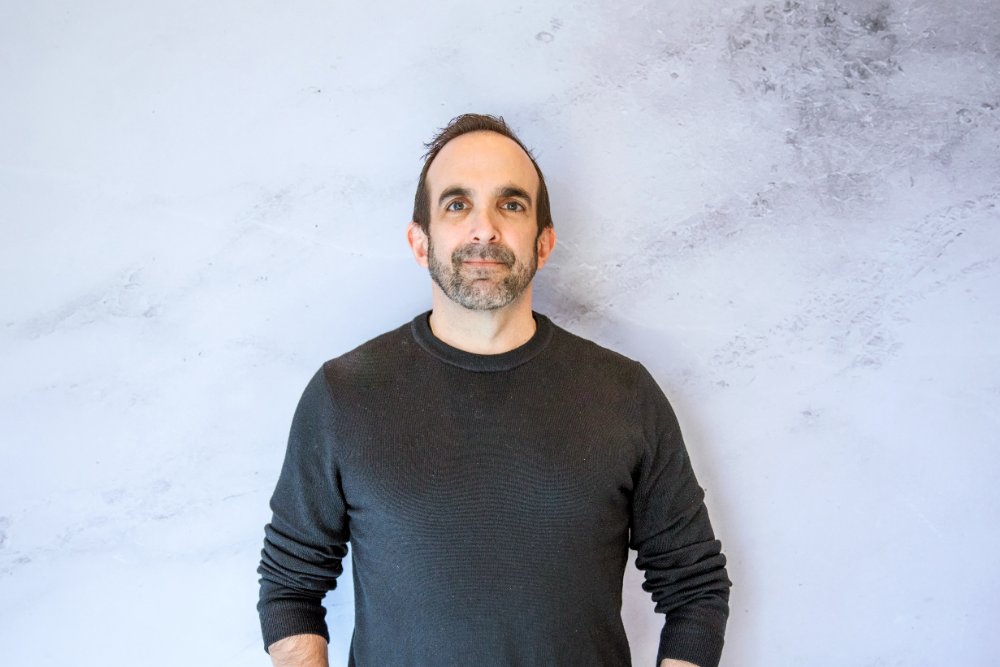
Brian M. Mittman, Esq.
Managing Partner · Markhoff & Mittman, P.C.
Call 866-205-2415 Schedule with Brian- Admitted in New York
- 30+ years in practice
- Attends Board hearings personally
Brian has personally handled New York workers' compensation, SSDI, and personal-injury cases for over three decades. Your case is never handed off to a paralegal.
- Admitted in New York and New Jersey
- Pace University School of Law, J.D.
- Litigates before the Workers' Compensation Board
Randy has litigated every type of claim before the Workers' Compensation Board on behalf of hundreds of claimants.
- Admitted in New York, 2008
- New York Law School, J.D. 2007
- With The Disability Guys since 2013
Benai has spent more than a decade fighting for injured workers before the Workers' Compensation Board and the New York State Employees' Retirement Board.
- Admitted in New York, 2007
- 20 years in practice
- Fluent in Spanish
Emily has spent two decades on New York workers' compensation and Social Security Disability matters, including service as an Agency Attorney and Hearing Officer for NYC Transit and the MTA.
- Admitted in New York, 2023
- Albany Law School, J.D. 2022
- Handles Third Department appeals
Lauren represents injured workers in Workers' Compensation matters and handles appeals before the Appellate Division, Third Department.




Need a workers' rights lawyer?
Free consultation. No fee unless we win. English or Spanish. Day or night.