
Harassment at Work Is Illegal — We Can Help

You have the right to work without being harassed
Workplace harassment is illegal when it is based on a protected characteristic — sex, race, national origin, religion, age, disability, sexual orientation, gender identity, pregnancy, or several other categories. Federal law (Title VII of the Civil Rights Act of 1964) prohibits harassment by employers with 15 or more employees. New York State Human Rights Law (Executive Law §296) covers employers with four or more employees, and the New York City Human Rights Law (NYC Admin. Code §8-107) covers virtually all NYC employers regardless of size and is one of the broadest anti-harassment laws in the country.
Harassment takes two main legal forms. The first is ‘hostile work environment’ harassment — when unwelcome conduct based on a protected characteristic is severe or pervasive enough to alter the terms or conditions of your employment. The second is ‘quid pro quo’ harassment — when a supervisor conditions a job benefit (promotion, raise, continued employment) on you submitting to sexual demands. Both are actionable. Under the 2019 amendments to the NY State Human Rights Law, New York has eliminated the ‘severe or pervasive’ threshold for state law claims, meaning harassment does not have to be extreme to be illegal.
Deadlines are critical. For EEOC charges, you generally have 180 days from the last act of harassment (300 days if a state agency also covers the claim, which is always the case in New York). Under the NY State Human Rights Law, you have three years to file in court directly without going through the EEOC first. Under the NYC Human Rights Law, you also have three years. Missing a deadline can permanently bar your claim. Call us as soon as the harassment occurs — do not wait.
What you need to know
Plain-English answers to the questions that come up most often on these cases.
Sexual Harassment
Unwelcome sexual advances, requests for sexual favors, sexually explicit comments, or physical contact of a sexual nature are all forms of illegal sexual harassment under Title VII, Executive Law §296, and NYC HRL §8-107. The harasser can be a supervisor, coworker, or even a client.
Read moreHostile Work Environment
A hostile work environment exists when harassment based on a protected characteristic is sufficiently severe or pervasive (under federal law) or simply unwelcome and based on a protected category (under the broader 2019 NY State standard) to affect your working conditions.
Read moreQuid Pro Quo Harassment
If a supervisor conditions a promotion, raise, or continued employment on sexual compliance — or punishes you for refusing — that is quid pro quo harassment. A single incident is sufficient to establish this type of claim.
Read moreFiling with EEOC or NY DHR
You can file a charge with the federal Equal Employment Opportunity Commission (EEOC) or the New York State Division of Human Rights (DHR). You have 300 days in New York to file an EEOC charge. Filing with the DHR or going directly to court under NYHRL gives you three years.
Read moreRetaliation for Reporting
If you report harassment and your employer fires you, demotes you, or makes your working conditions worse as a result, that retaliation is independently illegal under all three laws. You may have both a harassment claim and a retaliation claim.
Read moreNYC Human Rights Law — Broader Coverage
The NYC Human Rights Law (§8-107) is wider than state or federal law. It applies to employers with even one employee, covers more protected classes, and allows larger damages. If you work in New York City, this law often gives you the strongest claim.
Read moreHow we handle these cases
Document and preserve evidence
We help you collect texts, emails, voicemails, witness contact information, and a written timeline of events before evidence can be lost or deleted. Courts rely heavily on contemporaneous documentation.
Choose the right filing track
We evaluate whether to file with the EEOC, the NY State Division of Human Rights, the NYC Commission on Human Rights, or go directly to state or federal court. The choice affects your deadlines, damages, and litigation strategy.
Build the record of employer knowledge
Employers are liable for harassment by supervisors and, in many cases, for harassment by coworkers when they knew or should have known about it. We identify every complaint, HR report, and management-level communication that proves the employer was on notice.
Pursue full compensatory damages
Under the NYC Human Rights Law, there is no cap on compensatory damages. We pursue back pay, front pay, emotional distress damages, punitive damages where available, and attorney fees.
Negotiate or take the case to trial
We prepare every harassment case as if it will go before a jury. That preparation drives settlements. When employers refuse fair terms, we try the case.
Real cases. Real results.
Three recent Workers’ Rights outcomes — case context and result. No client identifying information.
Female employee in NYC subjected to repeated sexual advances by a senior manager over eight months. Manager retaliated against her when she refused. We filed under the NYC Human Rights Law. Case resolved in a confidential settlement covering all lost wages, emotional distress, and attorney fees.
Employee subjected to racially derogatory comments and exclusion from meetings because of national origin. After receiving an EEOC right-to-sue letter, we filed in state court under Executive Law §296. Jury awarded back pay and compensatory damages for emotional distress.
Worker reported sexual harassment by a coworker to HR. Within three weeks, employer reduced her hours and then terminated her. We pursued both the harassment claim and the retaliation claim. Settlement included full back pay, reinstatement option, and additional damages for retaliation.
Prior results do not guarantee a similar outcome. Each case is evaluated on its own facts. The case outcomes shown are representative examples; details have been altered or generalized to protect client confidentiality.
Related questions
Quick answers from our FAQ library.

Other ways we help
Same firm, same approach — different practice areas under one roof.
Workers’ Compensation
Injured at work. Lost wages. Denied benefits.
Learn more →Social Security Disability
Can’t work due to a disability. SSDI & SSI claims, denials, appeals.
Learn more →Long-Term Disability
Private LTD insurance denied or cut off. ERISA appeals.
Learn more →Personal Injury
Car accident. Construction site. Scaffold Law.
Learn more →Workers’ Rights lawyers near you
Seven New York offices serving working clients across the state.
The attorneys who work your case
Not a call center. The lawyer who signs you is the lawyer who shows up.
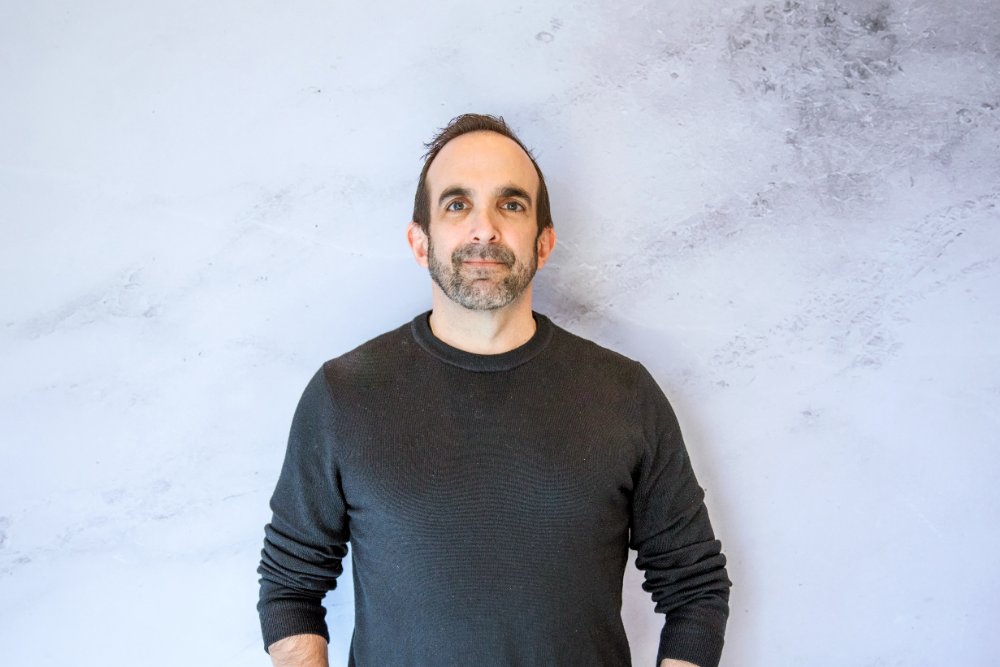
Brian M. Mittman, Esq.
Managing Partner · Markhoff & Mittman, P.C.
Call 866-205-2415 Schedule with Brian- Admitted in New York
- 30+ years in practice
- Attends Board hearings personally
Brian has personally handled New York workers' compensation, SSDI, and personal-injury cases for over three decades. Your case is never handed off to a paralegal.
- Admitted in New York and New Jersey
- Pace University School of Law, J.D.
- Litigates before the Workers' Compensation Board
Randy has litigated every type of claim before the Workers' Compensation Board on behalf of hundreds of claimants.
- Admitted in New York, 2008
- New York Law School, J.D. 2007
- With The Disability Guys since 2013
Benai has spent more than a decade fighting for injured workers before the Workers' Compensation Board and the New York State Employees' Retirement Board.
- Admitted in New York, 2007
- 20 years in practice
- Fluent in Spanish
Emily has spent two decades on New York workers' compensation and Social Security Disability matters, including service as an Agency Attorney and Hearing Officer for NYC Transit and the MTA.
- Admitted in New York, 2023
- Albany Law School, J.D. 2022
- Handles Third Department appeals
Lauren represents injured workers in Workers' Compensation matters and handles appeals before the Appellate Division, Third Department.



Need a workers' rights lawyer?
Free consultation. No fee unless we win. English or Spanish. Day or night.