
Hurt at work in New York? The first 30 days decide everything.
Missing a deadline or a form in the first month can cost you months of benefits — or your entire claim. New York Workers’ Compensation Law sets strict notice and filing windows. Five steps taken in the right order protect your medical coverage, your weekly check, and your right to a permanency award. Free consultation. No fee unless we win.
Five things to do in the first 30 days
The first 30 days matter most. Five steps that protect your claim — and your benefits, in this order.
-
Report the injury to your employer — in writing
Under NY WC Law § 18 you lose your right to benefits if you fail to give written notice within 30 days of the accident — or within 30 days of knowing that a disease or condition is work-related. A text or email to a supervisor counts. Keep the proof. Do not rely on a verbal report alone.
-
See an authorized workers’ comp doctor
Not your personal physician — an authorized provider, as soon as possible. The treating doctor’s first report (Form C-4) triggers the carrier’s obligation to accept or deny your claim within 18 days. Choose carefully: changing doctors later requires Board permission under § 13-b unless you have an emergency.
-
File the Employee Claim (C-3) with the Workers’ Compensation Board
The absolute deadline is two years from the accident date under § 28, but filing within the first 30 days speeds up your first hearing and your first check.
-
Save every document
Accident report, medical notes, wage stubs — keep all of it. The paper trail is what establishes both that the injury happened at work and what your average weekly wage actually was.
-
Talk to a workers’ comp attorney before you give a recorded statement
The insurance carrier’s adjuster works for the carrier, not for you. Get advice before you answer questions on the record. The consultation is free and there is no fee unless we win.

What you need to know
Plain-English answers to the questions that come up most often on these cases.
Can My Employer Fire Me?
§ 120 prohibits retaliation for filing a claim.
Read moreCan I Switch Doctors?
Rules for changing your authorized treating physician.
Read moreWhat Happens at an IME?
The carrier’s independent medical exam — and how to survive it.
Read moreEmployer Denies Injury Is Work-Related
How to fight a carrier’s factual denial.
Read morePre-Existing Conditions
A prior injury does not bar your claim.
Read moreWCB Hearing Process
What to expect at your first Board hearing.
Read moreHow we handle these cases
We lock in the notice
We document the date and method of your employer notice under § 18 and, where the window has passed, we argue the employer had actual knowledge of the accident — a recognized exception that preserves claims.
We place you with an authorized doctor
We connect you with an authorized workers’ comp physician who understands how to write causally-related medical reports — the language that keeps your claim alive at the Board.
We file the C-3 immediately
We complete and submit your Employee Claim (C-3) with the Workers’ Compensation Board the day you retain us, triggering the hearing calendar and stopping the two-year clock from becoming an issue.
We intercept carrier investigators
Carriers often send field investigators or request recorded statements within days of a claim. We advise you on what to say and what not to say — and we handle carrier communications from that point forward.
We calendar every deadline
§ 25 gives the carrier 18 days to accept or deny after the first medical report. We track that window and move to compel a response if the carrier stalls — keeping your first benefit payment on schedule.
Real cases. Real results.
Three recent Workers’ Compensation outcomes — case context and result. No client identifying information.
Client reported verbally but not in writing. We proved the supervisor had actual knowledge of the accident on the date it happened, satisfying the § 18 exception and saving the claim.
Client was terminated two weeks after filing a C-3. We filed a discrimination complaint, and the Board assessed a civil penalty and ordered reinstatement with back pay.
Carrier denied claim as not work-related within 18 days. We produced the accident report and treating doctor’s causal opinion, and the WCLJ established the claim at the first hearing.
Prior results do not guarantee a similar outcome. Each case is evaluated on its own facts. The case outcomes shown are representative examples; details have been altered or generalized to protect client confidentiality.
Related questions
Quick answers from our FAQ library.

Other ways we help
Same firm, same approach — different practice areas under one roof.
Social Security Disability
Can’t work due to a disability. SSDI & SSI claims, denials, appeals.
Learn more →Long-Term Disability
Private LTD insurance denied or cut off. ERISA appeals.
Learn more →Personal Injury
Car accident. Construction site. Scaffold Law.
Learn more →Workers’ Rights
Retaliation, wage theft, harassment. Plaintiff-side only.
Learn more →Workers’ Compensation lawyers near you
Seven New York offices serving working clients across the state.
The attorneys who work your case
Not a call center. The lawyer who signs you is the lawyer who shows up.
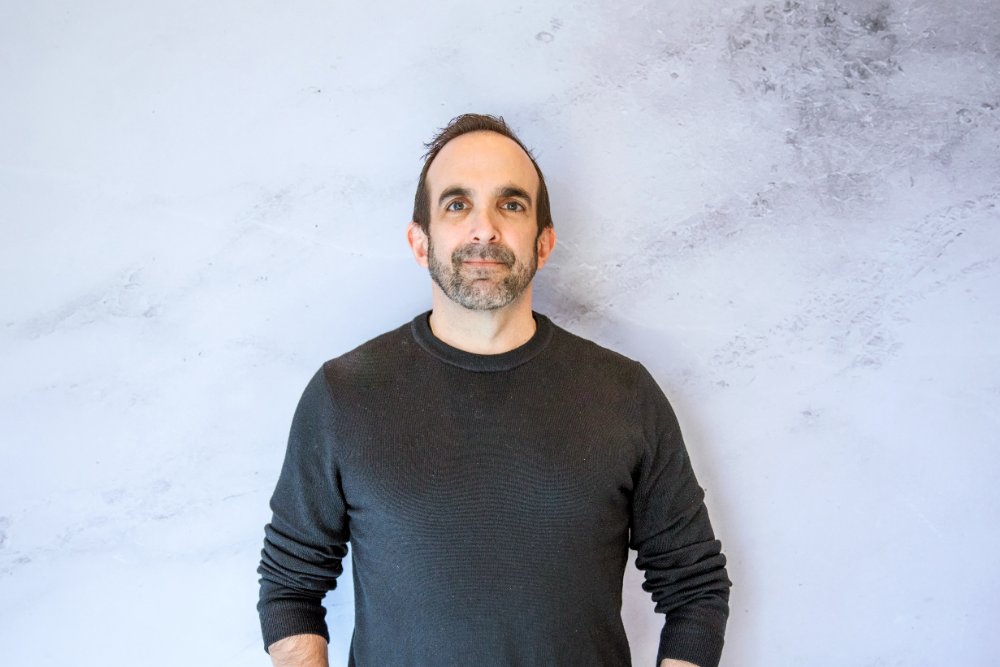
Brian M. Mittman, Esq.
Managing Partner · Markhoff & Mittman, P.C.
Call 866-205-2415 Schedule with Brian- Admitted in New York
- 30+ years in practice
- Attends Board hearings personally
Brian has personally handled New York workers' compensation, SSDI, and personal-injury cases for over three decades. Your case is never handed off to a paralegal.
- Admitted in New York and New Jersey
- Pace University School of Law, J.D.
- Litigates before the Workers' Compensation Board
Randy has litigated every type of claim before the Workers' Compensation Board on behalf of hundreds of claimants.
- Admitted in New York, 2008
- New York Law School, J.D. 2007
- With The Disability Guys since 2013
Benai has spent more than a decade fighting for injured workers before the Workers' Compensation Board and the New York State Employees' Retirement Board.
- Admitted in New York, 2007
- 20 years in practice
- Fluent in Spanish
Emily has spent two decades on New York workers' compensation and Social Security Disability matters, including service as an Agency Attorney and Hearing Officer for NYC Transit and the MTA.
- Admitted in New York, 2023
- Albany Law School, J.D. 2022
- Handles Third Department appeals
Lauren represents injured workers in Workers' Compensation matters and handles appeals before the Appellate Division, Third Department.




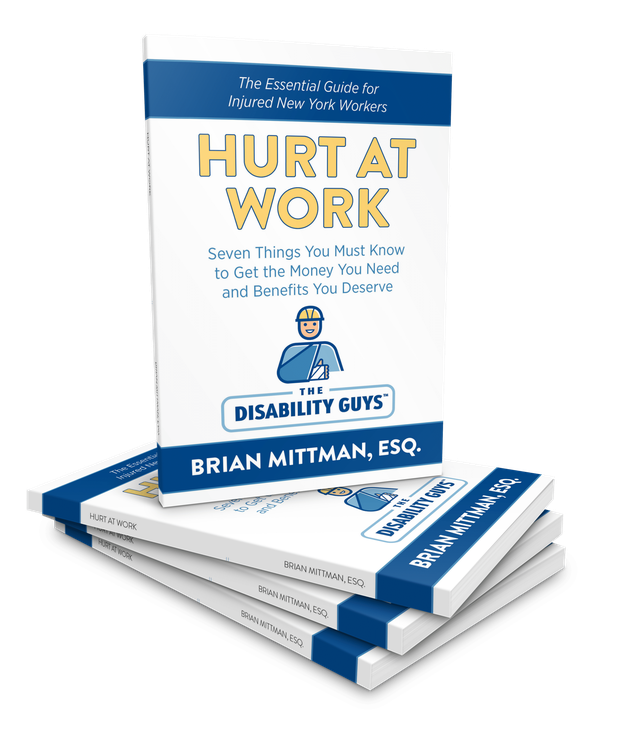
Need a workers' compensation lawyer?
Free consultation. No fee unless we win. English or Spanish. Day or night.